Haystack vs LangChain (2026): Pick the Right LLM Framework
Haystack vs LangChain compared - pipeline-based RAG and search vs the broadest agent and integration ecosystem, with a clear decision matrix and verdict for 2026.
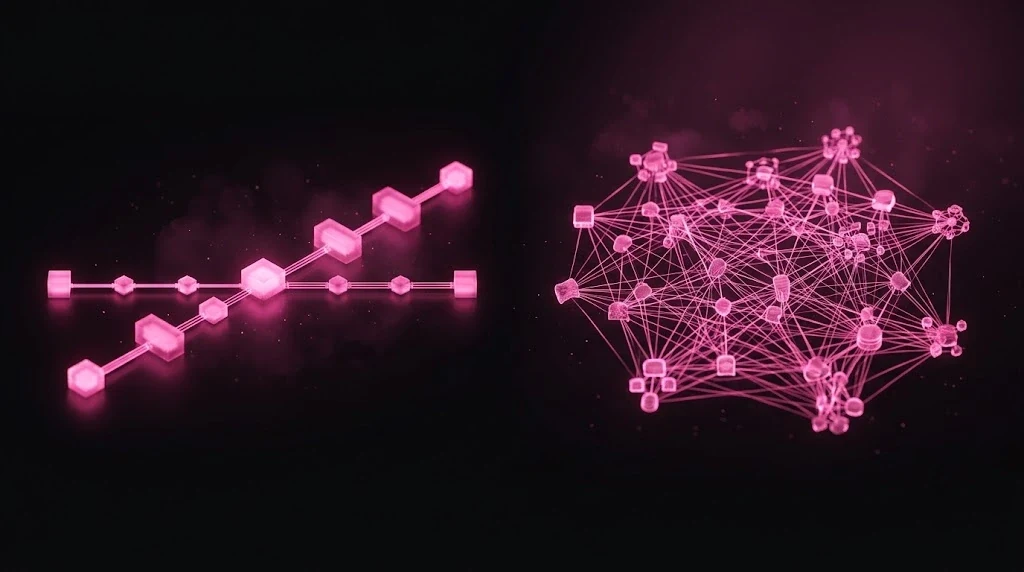
Choosing between Haystack and LangChain comes down to one question: is your core problem search and RAG, or general-purpose orchestration and agents? This post compares them head to head. For the adjacent decision on a RAG-focused data framework, see our LangChain vs LlamaIndex comparison.
The short answer
- Haystack - a clean, production-oriented framework by deepset built around explicit components and pipelines. Pick it when you want a maintainable RAG or document search system with strong typing and clear, reviewable structure.
- LangChain - the broadest general-purpose LLM framework, with the largest integration ecosystem plus LangGraph and LangSmith. Pick it when you need maximum flexibility and agentic breadth across many models, tools, and integrations.
- Both - viable when you want Haystack’s disciplined retrieval pipeline feeding a LangChain or LangGraph agent layer. Keep the boundary clean so you are not running two orchestration layers in the same path.
The rest of this post goes deep on when each wins.
Deciding factor to pick
| Your deciding factor | Pick |
|---|---|
| Core problem is RAG / document search / QA | Haystack |
| Need the largest integration ecosystem | LangChain |
| Want explicit, strongly-typed, reviewable pipelines | Haystack |
| Building complex, stateful, multi-step agents | LangChain (LangGraph) |
| Prioritize long-term maintainability over breadth | Haystack |
| Rapid prototyping across many tools and providers | LangChain |
| Want a managed pipeline cloud from the framework author | Haystack (deepset Cloud) |
| Want first-party tracing/eval tooling baked in | LangChain (LangSmith) |
Rule of thumb: if RAG and search are the product, choose Haystack; if breadth and agents are the product, choose LangChain.
What each tool is
- Haystack is an open-source Python framework from deepset for building production LLM applications and search. It is organized around an explicit component and pipeline architecture - retrievers, embedders, generators, and rankers connected into a typed pipeline graph - and is especially strong for RAG and document QA. Haystack 2.x is the current major rewrite, and deepset Cloud and deepset Studio are the managed options on top.
- LangChain is a broad, general-purpose LLM application framework covering chains, agents, tools, and memory, with LCEL for composition. It has the largest integration ecosystem of any framework, plus LangGraph for stateful agent workflows and LangSmith for observability and evaluation.
Haystack vs LangChain: head-to-head
| Dimension | Haystack | LangChain |
|---|---|---|
| Maintainer | deepset | LangChain, Inc. |
| Primary focus | RAG, search, document QA | General-purpose orchestration + agents |
| Core abstraction | Components + typed pipelines | Chains, LCEL, agents |
| Language | Python | Python + JavaScript/TypeScript |
| Integration ecosystem | Solid, focused | Largest in the space |
| Typing / explicitness | Strong, explicit components | Looser, more flexible |
| Agent support | Supported | Deep (LangGraph for stateful agents) |
| RAG ergonomics | First-class, purpose-built | Capable, more glue code |
| Observability | Pipeline-level + deepset tooling | LangSmith (first-party) |
| Managed offering | deepset Cloud / Studio | LangGraph Platform / LangSmith |
| Learning curve | Cleaner, more predictable | Broad surface, can sprawl |
| License | Open source (Apache 2.0) | Open source (MIT) |
When to choose Haystack
Pick Haystack when:
- RAG or document search is your core product, not a side feature - retrievers, rankers, and generators are first-class.
- You value explicit, reviewable structure. Typed components and a visible pipeline graph make systems easier to reason about and onboard new engineers into.
- Long-term maintainability matters more than ecosystem size. Less glue code, fewer surprising abstractions.
- You want a managed path from the same vendor via deepset Cloud or Studio for hosted pipeline development and deployment.
- Your team is Python-first and wants a focused, opinionated framework.
- You are standardizing a production search/QA system that needs to stay stable as it scales.
When to choose LangChain
Pick LangChain when:
- You need the broadest integration ecosystem - vector stores, loaders, model providers, tools, and third-party services.
- Agents are central. LangGraph gives you stateful, multi-step, controllable agent workflows beyond what a linear pipeline expresses.
- You want first-party observability and eval baked in via LangSmith.
- You are prototyping fast across many models and tools and want flexibility over rigidity.
- You need JavaScript/TypeScript as well as Python - LangChain ships both.
- RAG is just one part of a larger, multi-capability application.
Can you use them together?
Yes, and it is a sensible split when each layer plays to its strength. A common pattern: build the retrieval and RAG pipeline in Haystack because its typed components keep search maintainable, then wrap that pipeline as a tool that a LangChain or LangGraph agent calls when it needs to ground an answer. The agent owns multi-step reasoning and tool orchestration; Haystack owns “fetch the right context, cleanly.” The key discipline is keeping the boundary sharp so you are not maintaining two overlapping orchestration layers in the same code path. If you are weighing the RAG data layer separately, our LangChain vs LlamaIndex comparison covers that decision.
Cost comparison
Both frameworks are free and open-source to self-host - there is no license fee for either Haystack or LangChain. Your real spend sits in three places:
- Model tokens - LLM generation and embedding API calls, identical regardless of framework.
- Infrastructure - vector stores, document stores, and the compute to run retrievers and rankers.
- Optional managed tiers - this is the only place the pricing models diverge. Haystack’s add-ons are deepset Cloud and deepset Studio; LangChain’s are LangSmith (observability/eval) and LangGraph Platform (agent deployment). Each has its own usage-based or plan-based pricing, and all are opt-in.
In short: the framework choice itself is cost-neutral. Budget for tokens and infra first, and only layer in managed tooling if you want hosted development, deployment, or tracing.
Common pitfalls
- Following Haystack 1.x tutorials on a 2.x project. Haystack 2.x is a ground-up rewrite around the component/pipeline model - old guides will not map. Always confirm the version.
- Reaching for LangChain agents when a pipeline would do. If your problem is linear retrieve-then-generate, a Haystack pipeline (or a simple LangChain chain) is more maintainable than a full agent.
- Underestimating LangChain’s surface area. The breadth that makes it powerful also makes it sprawl - pin versions and keep your dependency tree tight to avoid churn.
- Treating framework choice as a substitute for retrieval quality. Neither tool fixes a bad chunking, embedding, or ranking strategy - that work is on you regardless of framework.
- Skipping evaluation. Whether you ship on Haystack or LangChain, RAG and agents fail silently without a test harness for retrieval accuracy, faithfulness, and hallucination.
Related reading
- LangChain vs LlamaIndex - the RAG data framework decision alongside this one
- LangGraph vs AutoGen - if your build is agent-first, compare the agent orchestration layers
Whichever framework you pick, the quality risk lives in retrieval and generation behavior, not the framework name. When a regression points at the model rather than the pipeline, take it a layer down to model validation and ML model QA at aiml.qa.
Getting help
We help Series A-C AI startups choose between Haystack and LangChain, then put a real QA harness around whatever they ship - retrieval accuracy, faithfulness, and hallucination gates wired into CI. A genai.qa Readiness Assessment covers framework fit, architecture review, and the testing gaps to close before you scale.
Frequently Asked Questions
Haystack vs LangChain: which should I use?
Use Haystack when you want a clean, production-oriented RAG or search pipeline with explicit, strongly-typed components - retrievers, embedders, rankers, and generators wired together in a readable pipeline graph. Use LangChain when you need the broadest integration ecosystem and maximum flexibility for agents, chains, tools, and memory, especially for non-RAG or heavily agentic workloads. Haystack optimizes for maintainability and clarity; LangChain optimizes for breadth and speed of prototyping. Neither is universally better - match the tool to whether your core problem is search/RAG (Haystack) or general-purpose orchestration and agents (LangChain).
Is Haystack a good LangChain alternative?
Yes, Haystack is a strong LangChain alternative specifically for RAG and document search/QA. Its component-and-pipeline architecture is more explicit and easier to reason about than LangChain's chains and LCEL, which many teams find easier to maintain in production. The tradeoff is ecosystem size: LangChain has far more third-party integrations and a larger community, plus LangGraph for stateful agents and LangSmith for observability. If your project is RAG-centric, Haystack is a clean alternative; if you need exotic integrations or complex agent graphs, LangChain still leads.
Who makes Haystack and is it open source?
Haystack is built by deepset, a German company focused on LLM and NLP infrastructure. The framework is open-source Python and free to self-host. deepset also offers managed products on top of it - deepset Cloud and deepset Studio - for teams that want hosted pipeline development, deployment, and monitoring. Haystack 2.x is the current major version, a ground-up rewrite around the component plus pipeline model, so older Haystack 1.x tutorials may not apply.
Can I use Haystack and LangChain together?
You can, though most teams standardize on one for a given service. A common pattern is using Haystack for the retrieval and RAG pipeline because its components and typing make search maintainable, while using LangChain or LangGraph for an agent layer that orchestrates tools and multi-step reasoning around that pipeline. You can also wrap a Haystack pipeline as a tool that a LangChain agent calls. Keep the boundary clean so you are not maintaining two overlapping orchestration layers in the same code path.
How much do Haystack and LangChain cost?
Both core frameworks are free, open-source, and self-hostable - there is no license fee for either. Your real spend is LLM and embedding API tokens plus the infrastructure to run retrievers and vector stores. Paid costs only appear if you adopt managed add-ons: deepset Cloud or Studio for Haystack, and LangSmith or LangGraph Platform for LangChain, each with their own usage-based or plan-based pricing. Budget primarily for model tokens and vector database hosting, not the frameworks themselves.
Which framework is better for RAG and document search?
Haystack was designed around search and RAG from the start, so retrievers, embedders, rankers, and document stores are first-class, well-typed components and the pipeline graph maps cleanly to a RAG flow. LangChain absolutely does RAG too and has more vector store and loader integrations, but its abstractions are broader and less search-specific, which can mean more glue code and looser typing. For a maintainable, production RAG or document-QA system, Haystack usually wins on clarity; LangChain wins when RAG is just one part of a larger agentic application.
Complementary NomadX Services
Related Comparisons
Break It Before They Do.
Book a free 30-minute GenAI QA scope call. We review your AI application, identify the top risks, and show you exactly what to test before you ship.
Talk to an Expert